The City of the Dead in a City of the Dead
- At May 13, 2014
- By mausoleum
- In Doug Keister's Blog
 0
0

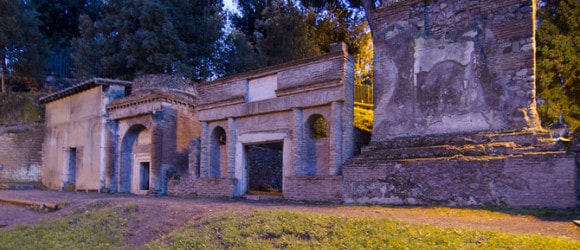
Pompeii’s Mausoleums Provide the First Glimpse of the City
Mausoleums make great time capsules, mirroring the styles and traditions of the cultures that create them. Nowhere is that more evident than Pompeii, a city of the dead.
The citizens of Pompeii had plenty of warning signs they were sitting on the edge of the time bomb Mt. Vesuvius. In 62 C.E., a small earthquake rattled the town. Seventeen years later, in 79 C.E., fissures opened and steam poured out of the cracks. A few days later, pent-up gasses exploded, raining down rock and ash all over the city and prompting over 18,000 of Pompeii’s citizens to flee. Fifteen hundred people were left behind — those who either chose to stay or couldn’t escape fast enough. Staying proved to be a fatal error. Every one of the 1500 perished.
The 79 C.E. eruption of Mt. Vesuvius buried Pompeii in a thick layer of volcanic ash (tephra) approximately 75 feet deep and put a timestamp on what life was like in a small Roman town in the autumn of 79. Pompeii became an architectural and historical treasure trove.
Read More»Family Mausoleums Afford Opportunities to Channel Inspiration
- At May 09, 2014
- By mausoleum
- In Doug Keister's Blog
- 0
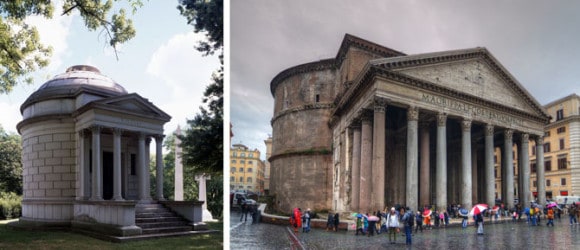
“Genius,” Thomas Edison famously said, “is 1% inspiration and 99% perspiration.” That quote is often morphed into success is 1% inspiration and 99% perspiration and the various percentages of inspiration and perspiration have been altered as well. But the message is clear: under the visible tip (inspiration) of the iceberg of invention is an enormous foundation of hard work. While that is almost always true, what history remembers is the final result and not the effort that it took to achieve it.
To be sure, constructing a mausoleum requires substantial amounts of perspiration, not only by those building it, but by the person funding it. But, again, it is the result that is enduring. To coin another famous quote “God is in the detail.” In other words, if you are going to expend a lot of energy and resources, it’s worth taking time to make some inspired choices.
So where does one look for inspiration when designing a mausoleum? Certainly, there are a number of perfectly appropriate mausoleums that come pre-designed. Most of these designs are based on classical architecture principals and have, since the middle of the 18th century, been a staple of most architects’ palettes.
Read More»Getting Out of Your Furnished Rut
- At December 17, 2013
- By mausoleum
- In Doug Keister's Blog
- 0
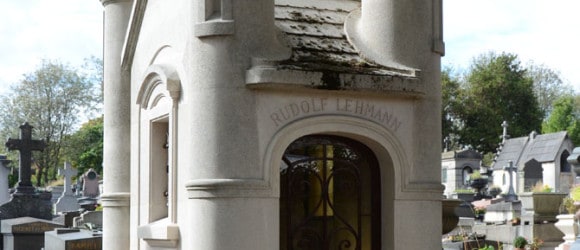
All of us get into ruts, whether it’s in our work or our leisure pursuits. There is a certain comfort with the familiar. But sometimes it’s good to explore new terrain and ideas. When contemplating one’s eternal home it might be worth considering the adventurous and unusual rather than just sticking to traditional styles.
When exploring cemeteries and mausoleums, I look for tombs that are a little (and sometime a lot) different. After all, after exploring dozens and dozens of cemeteries around the world, mausoleums, just like there urban counterparts, mansions, start to look alike. I like to add a little visual spice to my diet.
I seek out those seemingly out-of-place tombs and mausoleums and find myself wondering if the quirky architectural embellishments reflect an eccentric individual, or if, perhaps, the person simply wanted to make a special final statement.
What many people don’t know is that building a mausoleum in a unique style often costs little more than building one using a conventional design. All mausoleums share similar elements. They need to have foundations, crypts, doors, and substantial walls. It is just the details that separate the conventional from the unique.
Read More»Rebuilding of Timbuktu’s World Heritage Mausoleums Underway
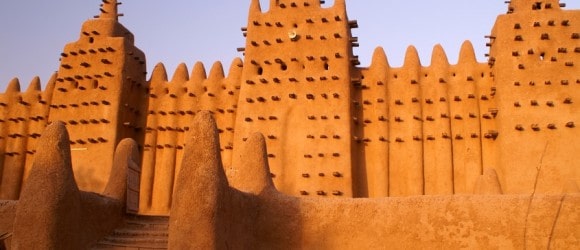
Malian masons started reconstructing the mausoleums in Timbuktu, recognized by UNESCO as a World Heritage site. A group of 14 mausoleums were destroyed by a group of armed rebels before a French intervention in the area.
The Djingareyber Mosque, the largest mosque at the World Heritage site, received a new façade and will be under maintenance for a month. Malian architects and technicians are planning and executing tasks related to reconstructing the mausoleums to return them to their former state and repairing damage done by the rebels.
Timbuktu’s mausoleums hold many ancient artifacts, including a collection of monuments and manuscripts. According to UNESCO, around 4,200 manuscripts, some of which date back to the pre-Islamic era, were destroyed when extremist militants seized control of the city.
Read More»The Panthéon: Two Women Given Burial In French Hero Mausoleum
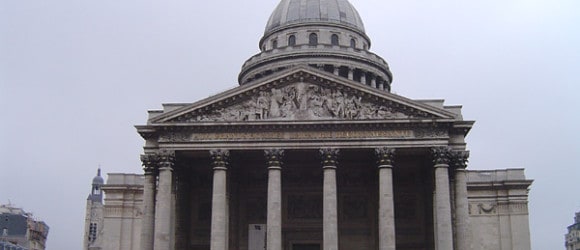
Marie Curie is about to get some new neighbors. President François Hollande of France announced he selected two men and two women to be interred in the Panthéon, France’s historic mausoleum and tourist attraction located in Paris’ Latin Quarter.
Of the 73 heroes who have been honored in the Panthéon, only two are women—Marie Curie, the only woman to gain entrance on her own merit, and Sophie Bertholot, who was buried with her husband Marcellin Bertholot. Other interred heroes include Voltaire, Jean-Jacques Rousseau, Émile Zola, and Louis Braille.
The two women to be buried are French resistance fighters Germaine Tillion and Genèvieve de Gaulle-Anthonioz. Both fought against the German occupation of France during World World II. The two men selected by Hollande were resistance fighters as well.
Read More»