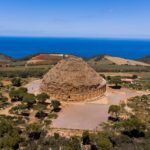
Green-Wood Cemetery Mausoleums, Brooklyn, New York

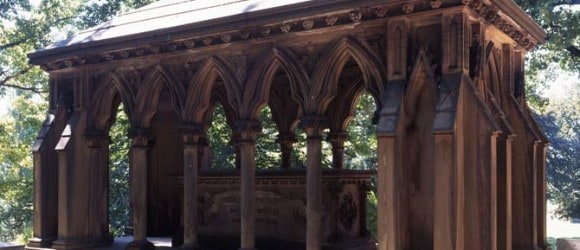
One of America’s earliest rural garden cemeteries, Green-Wood Cemetery in Brooklyn, New York is a significant historical site, in addition to being an active cemetery. Founded in 1838, Green-Wood Cemetery today spans more than 475 acres and is the final resting place for over 560,000 individuals – and has one of the largest collections of 19th and 20th century statuary and mausoleums. Green-Wood Cemetery is a Revolutionary War historic site, and was designated a National Historic Landmark in 2006.
Read More»Cypress Lawn Memorial Park Mausoleums, Colma, California
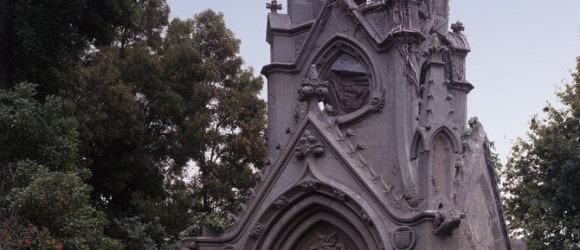
Cypress Lawn Memorial Park, known as the “City of the Silent,” is an important cemetery in Colma, California. Cypress Lawn Memorial Park, founded by Hamden Holmes Noble in 1892, has served many prominent citizens from the greater San Francisco area.
History of Cypress Lawn Memorial Park
Cypress Lawn Memorial Park was founded on an idea based on the failure of another prominent cemetery in the San Francisco area – Laurel Hill. In the 1860s, Laurel Hill was a premier cemetery in San Francisco, with beautiful trees and gardens and wide streets. With no trust funds or endowment to maintain the gardens and streets, however, Laurel Hill Cemetery fell into disrepair by the 1890s, and was considered a public disgrace. Hamden Holmes Noble, upon taking a carriage ride through Laurel Hill in the early 1890s, decided to start a new cemetery – one that would surpass Laurel Hill in beauty, and would be built on an endowment to ensure long-term care of the property.
Read More»Allegheny Cemetery Mausoleums, Pittsburgh, PA
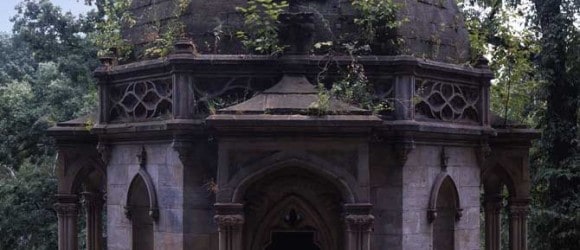
Allegheny Cemetery, the sixth oldest rural cemetery in America, memorializes more than 124,000 souls. Some of the oldest graves are from the French and Indian War, and have been moved here from their former burial site at the Trinity Cathedral in downtown Pittsburgh. Allegheny Cemetery is the final resting place of many of Pittsburgh’s notables. This picturesque cemetery is a member of the National Register of Historic Places.
Read More»Mausoleum in Saline, Michigan Celebrates 100th Anniversary
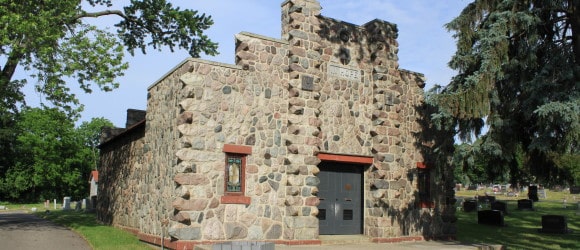
The Oakwood Cemetery mausoleum, built a century ago, is celebrating the milestone with a special ceremony last Sunday, according to the Saline Reporter. The structure has become one of Saline, Michigan’s historic landmarks and houses the remains of dozens of individuals interred throughout the last century.
The mausoleum dates back to 1913, when the Saline Observer reported that J.W. Flowers of Toledo, Ohio had purchased land at the Oakwood Cemetery in order to construct a brand new mausoleum. The cemetery handled the mausoleum design and construction, while Flowers was tasked with the sale of available mausoleum chambers. The mausoleum is comprised of 88 burial chambers, with a South Wall that holds 44 families and a North Wall that holds another 23 families. A number of local residents are interred within the mausoleum with their spouses or family members, the oldest of whom, John Hull, was born in 1842.
Read More»Rome’s Architectural Marvel: The Transformation of Hadrian’s Mausoleum Through History

Rome, a city renowned for its architectural grandeur, houses many iconic structures that stand as testaments to its rich history. Among these, Hadrian’s Mausoleum, the Castel Sant’Angelo, holds a unique place. Initially built as the final resting place for Emperor Hadrian, this monumental structure has undergone a remarkable transformation over the centuries, serving as a fortress, papal residence, and even a prison. This blog explores the evolution of Hadrian’s Mausoleum, highlighting its architectural ingenuity and historical significance, as well as its notable angel statue sitting atop the structure.
Read More»Exploring China’s Sacred Burial Sites: From Terra Cotta Warriors to Imperial Mausoleums
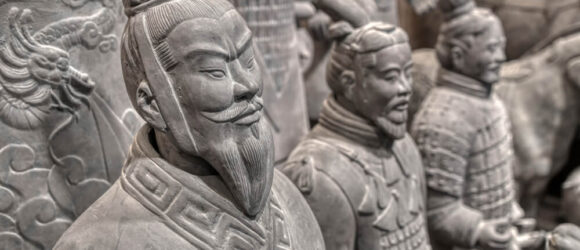
China, a land rich in history and culture, holds a deep reverence for its ancestors, and this respect is vividly displayed in its sacred burial sites and cultural relics. From the famed Terra Cotta Warriors of Xi’an to the elaborate imperial tombs scattered across the country, China’s burial sites are a fascinating intersection of art, history, and spirituality. These Chinese tombs and mausoleums offer a glimpse into the country’s dynastic past, providing insight into the lives, beliefs, and traditions of the Chinese people through the ages.
Read More»Exploring the Hanyang Mausoleum: Xi’an’s Hidden Imperial Treasure & Burial Architecture

When most people think of Xi’an, the first thing that comes to mind is the terracotta warriors, the awe-inspiring collection of life-sized statues built to accompany China’s first emperor, Qin Shi Huang, into the afterlife. However, another monumental site in the region often flies under the radar: the Hanyang Mausoleum (also called Han Yang Ling) is an incredible yet lesser-known imperial tomb complex located just outside Xi’an.
The Hanyang Mausoleum is the final resting place of Emperor Jing of Han (also known as Liu Ying) and his empress, Wang. Emperor Jing ruled from 157 BCE to 141 BCE during the Western Han Dynasty, a period of peace and prosperity for China. He was the fourth emperor of the Han Dynasty. The mausoleum, often referred to as a “hidden treasure,” showcases the grandeur and complexity of imperial burial practices and provides valuable insights into ancient Chinese culture, art, and architecture.
Read More»Mausoleum of Santa Costanza: Rome’s Hidden Gem of Byzantine Art
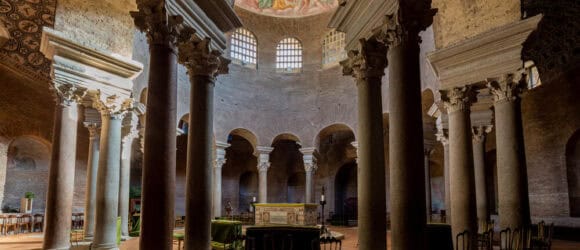
The Mausoleum of Santa Costanza in Rome is often regarded as a hidden gem, particularly for those interested in Byzantine art and early Christian architecture. Despite its historical and artistic significance, the Mausoleum of Santa Costanza remains relatively lesser-known than other Roman monuments, making it a peaceful destination for visitors seeking to explore Rome’s history. Here are some reasons this mausoleum deserves a visit when you are in the Eternal City.
Read More»Nintoku Mausoleum: Exploring the Tomb of Japan’s Legendary 5th Century Emperor

The Nintoku Mausoleum, the tomb of Emperor Nintoku, is one of the most awe-inspiring structures in Japan. This burial site, also known as Daisen Kofun, is located in Sakai City, Osaka. Its distinctive keyhole shape reflects the architectural brilliance and ceremonial importance of Japan’s Kofun period.
This megalithic mausoleum is part of the Mozu Tombs cluster, which gained World Heritage status in 2019 as part of the Mozu-Furuichi Kofun Group. These megalithic mausoleums are a magnificent example of Japan’s burial mound architecture from the 3rd to 6th centuries when Japan’s wealthy leaders built monumental tombs to showcase their power and influence.
Read More»The Legacy of Ransom Eli Olds
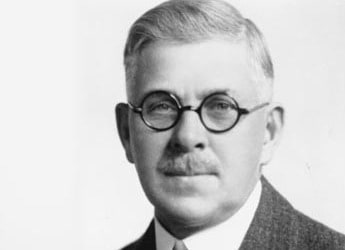
Throughout his life, Ransom Eli Olds received recognition, awards, and accolades. Perhaps best known for founding the Oldsmobile Motor Company, Olds also started or helped to arrange several other companies, from parts suppliers to banks. Olds was also the first person to make use of an assembly line for the production of his automobiles. Henry Ford automated the assembly line some time later. Though Ransom E. Olds departed this life 64 years ago, his death has not disqualified him from current recognition and award.
Preservation Lansing, recognizing the recent repairs and renovations to the Olds Mausoleum in Lansing’s Mt. Hope Cemetery, entertained a nomination for the stately structure in the category “Non-Residential Project Costing Less Than $1 Million”. The specificity of the category was appreciated by Olds’ great-granddaughter Debbie Stephens, who along with her two sisters paid for the repair and restoration of the mausoleum.
“Non-residential – I like that,” she said. “It does have residents, but…”
Read More»